
Musical Lens - In Conversation with Gretchen Matzke
By Genaro Ng
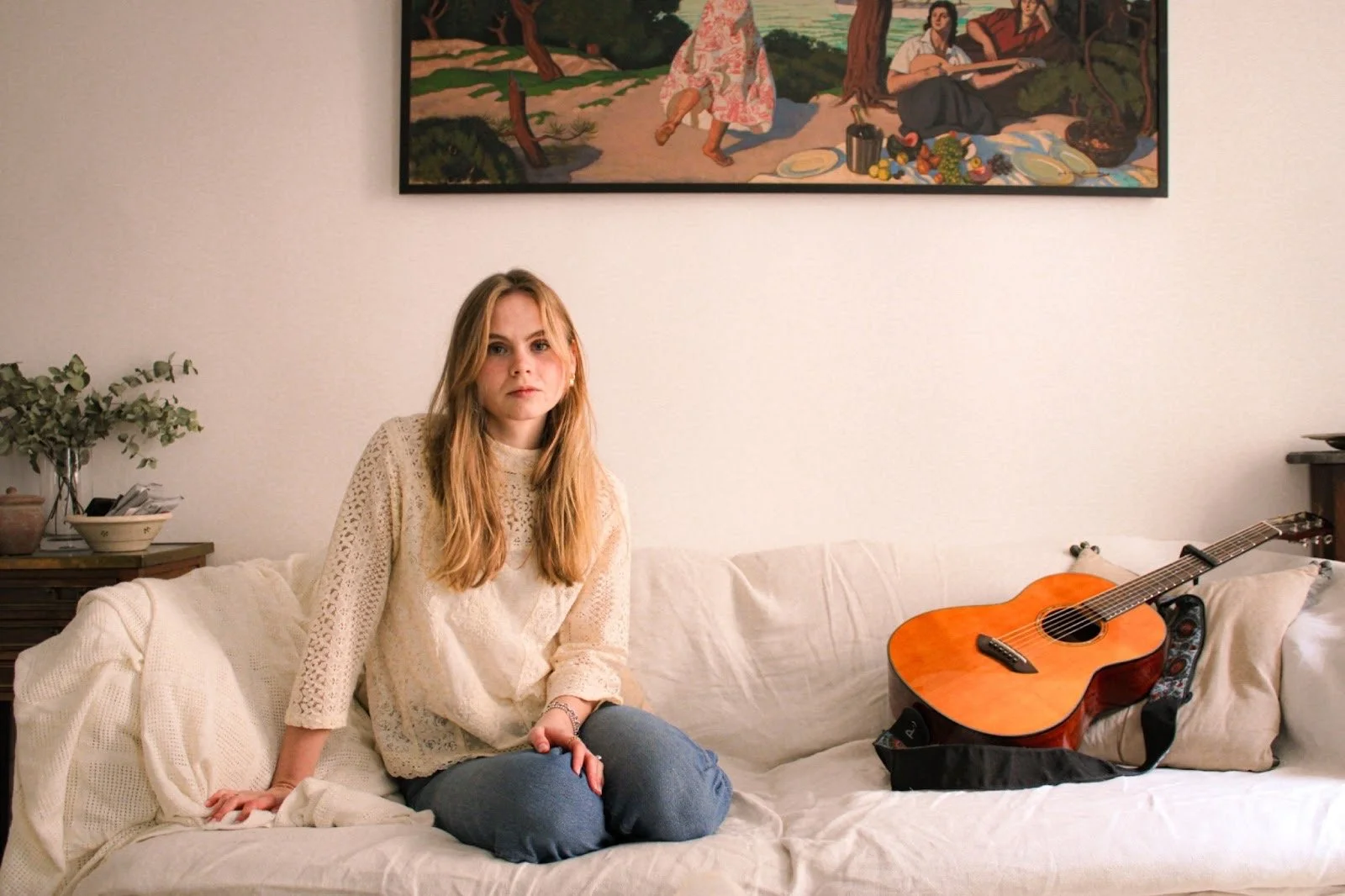
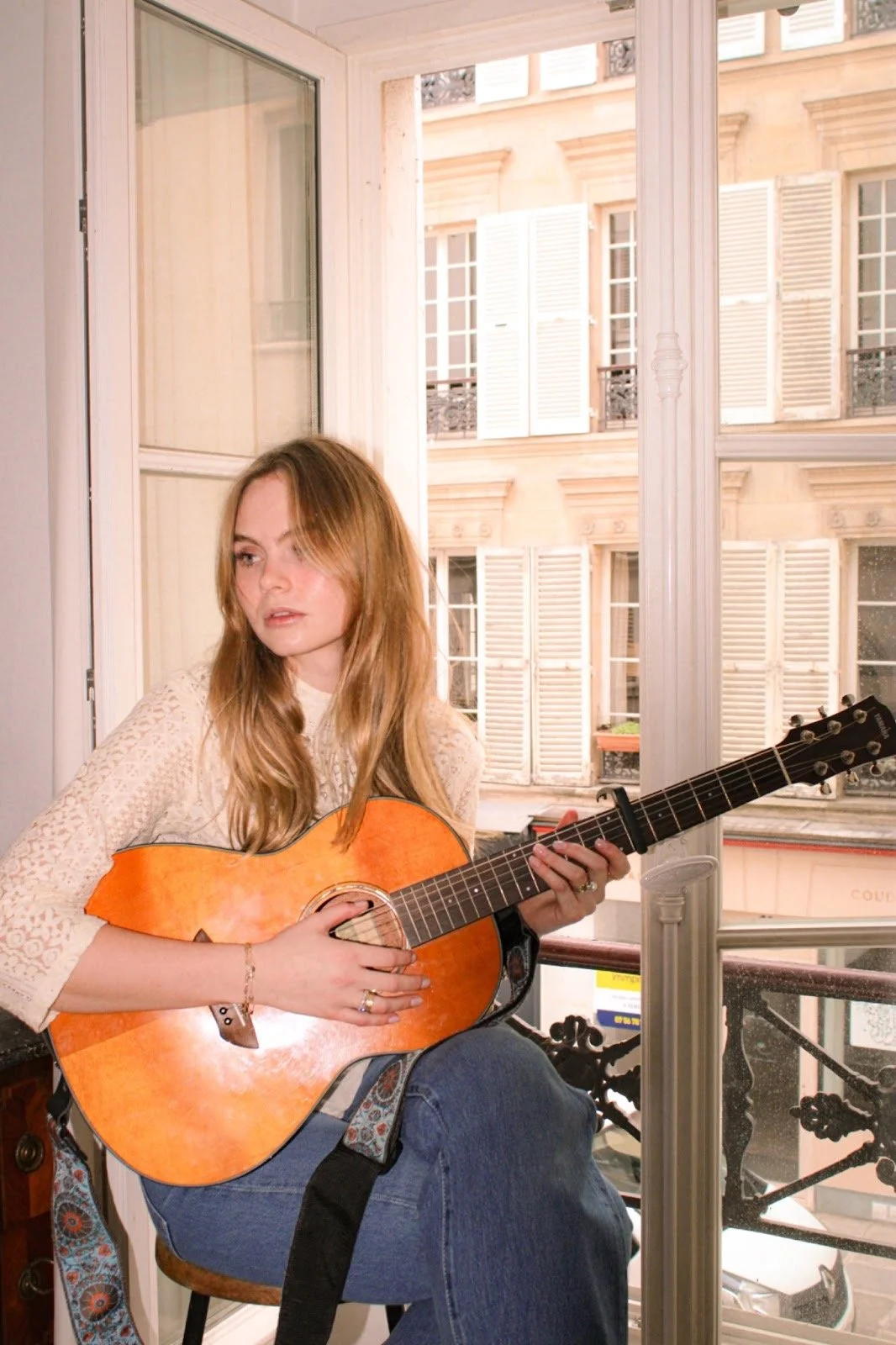
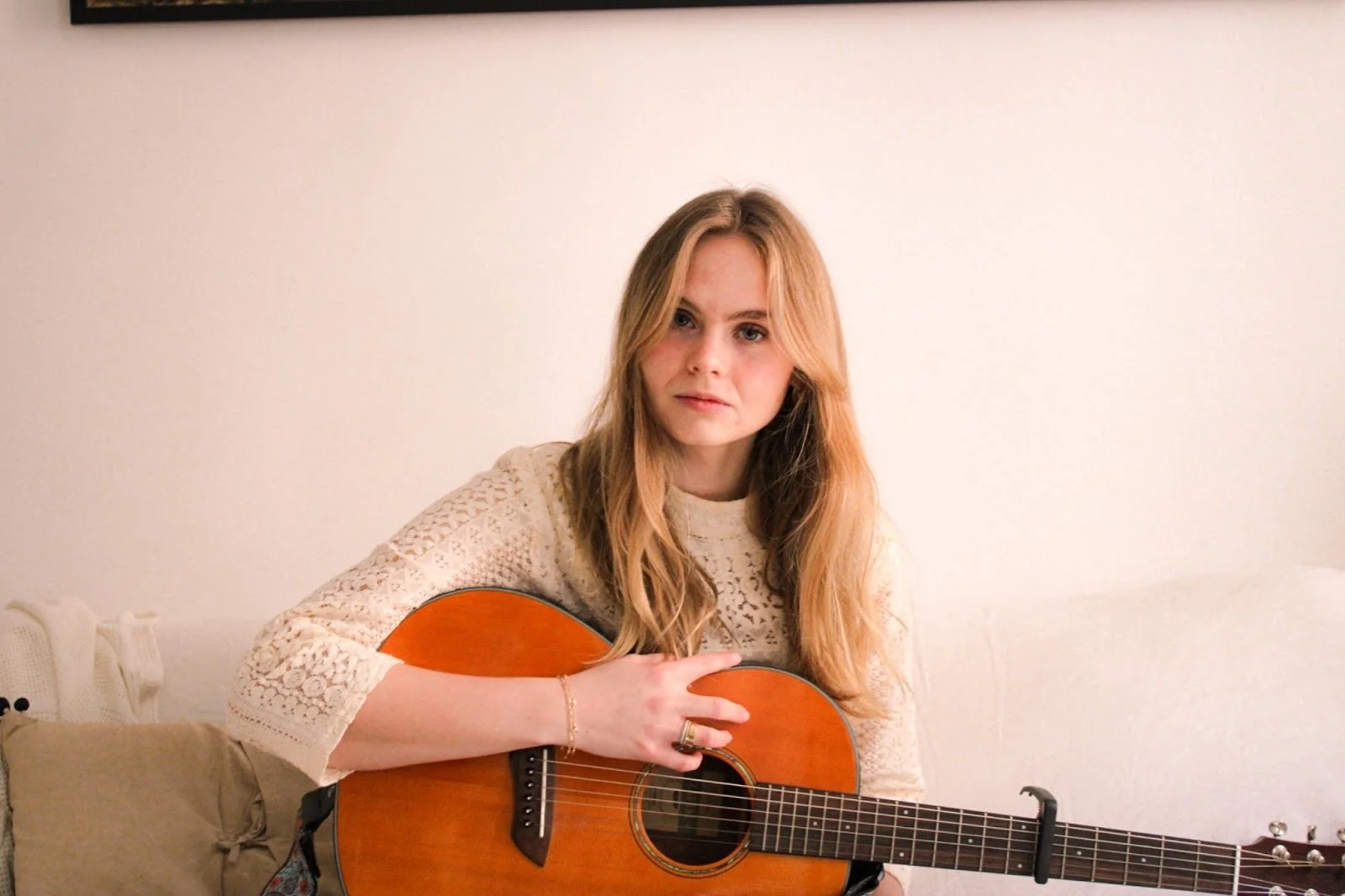
Gretchen Matzke, Paris France, photographed by Genaro Ng
For most people, music is one of the most sought after forms of relief, particularly in times of hardship. For others, it is the means through which they process reality, and twenty year old singer-songwriter Gretchen Matzke avidly considers herself the latter. After moving to Paris two and a half years ago, Gretchen began exploring music on her own terms beyond the structure of the musical institutions she trained in, and in doing so, she’s been developing her observational lens for life.
Between frostbitten Chicago winters and suntan summers in Martha’s Vineyard, one thing always remained constant in Gretchen’s childhood - her love for sound. Performances with the United Voices of Chicago and the Civic Opera of Chicago solidified music as a lifelong passion and professional aspiration for Gretchen. As a young artist, she is now working on her first self produced album while refreshing her classical training with the Paris Choral Society.
Genaro Ng. What is the first memory you associated with music?
Gretchen Matzke. It’s difficult for me to point to one memory since I don’t really have a distinction between life with music and life without music. So, every single memory is in some way connected to the sound and rhythm that I have in me. Music was always playing in the house. My sister was always singing something, I was always singing something. It just kind of seems innate. Oh, and the church choir. We would go to Sunday services and they had this beautiful choir. Those were some of my first encounters with music.
G.N. Tell me about music and the role it played in your life in a broader sense.
G.M. I think, again, there is no distinction between music and my life because music is the way that I see the world and how I process and how I understand. But the musical community has definitely been my safe haven. Where I would struggle to find community in school I found through people who are likeminded and experimented with creativity, sound and color. I guess my personality has been shaped by everyone I’ve encountered that sees the world through this specific lens. I spent ten years with the Chicago children’s choir. That’s probably the biggest musical community in my life. It’s a choir that takes kids from across the city and gives them space to practice art and their vocal abilities by singing together. One thing that was always stressed in the choir is that everyone is a global citizen and that music is this universal language. It’s a cliché, but everybody speaks it, experiences it, and is able to empathize through it. You don’t really need to understand someone’s perspective. I think when I sing I need a level of vulnerability that’s super raw and the same goes for anyone I’m singing with so I’m able to connect with voice and sound.
G.N. Tell me about the time you realized music isn’t just something you’re good at but something you want to do.
G.M. A lot of people who write songs probably point to the same “I wanna be on broadway” as a little kid. But I grew up in a lot of professional environments so I worked with the Civic Opera and the Chicago symphony orchestra and those were very professional environments with professional expectations at a super young age. That kind of demonstrated to me what a career in music would look like. There’s obviously so many different types of musical careers, but I got to observe a lot of those roles. They talked about things such as unions, and I learned about what it would be like to try to create all of that for myself. There's definitely a lot of fear when it comes to trying to actualize that. But I think just having it demonstrated to me was probably tye biggest influence.
G.N. At the time that you were performing with the Chicago symphony orchestra, you were committed to long rehearsal hours outside of your studies. How has making music on your own time in Paris away from the organizational structure of musical institutions affected your relationship with singing?
G.M. It’s become my own. It’s a meditative practice at this point. It’s less of a chore, I mean, I don’t want to call it a chore - it was never that, but, especially after school, being committed to another three or four hours of rehearsal was quite grueling and intense. To figure out what it means to me, to have my own schedule and expectations instead of someone else’s has been really freeing. I feel the most able to explore when it’s on my own terms, so when I was working for other people I felt those pressures. I was creating for someone else and my art felt more like a product, I was selling it in a way. Now it’s just a part of my routine.
G.N. Life outside of private school: expanding to new socio-economic and racially diverse classes and building new connections. Do you think that even now music allows you to form connections you otherwise might not.
G.M. Totally. I do this open mic in the summers at a local music store in Martha’s Vineyard which really unfortunately has just closed because they lost their funding. I reference that environment for my biggest sense of community because it's all age groups and has a very diverse, wacky crowd. Everyone sings stuff they’ve written themselves. To go somewhere at the same time every week and be able to exchange with people takes out all these age barriers, because again this method of communication through music strips all of these identifiers away. Here in Paris I think it’s been hard for me to find a community, but I’m working on it. Whenever I run into people I take the chance to ask them about the projects they’re working on. At the end of last year, one of my university professors suggested a local choir, the Paris Choral Society, so a couple months ago I auditioned and started going to rehearsals. I discovered a community of a lot of retirees, moms, students, and it’s just been a very lovely community where I’ve been able to delve into more classical music, practice choral arrangements and my site reading skills and such. The group contains expats from all around so there are a lot of international voices and a lot of cool stories. Our first concert is this week and I’m super excited. It’s nice to know that even if my professional aspirations don’t work out there will always be a space for music in my life as long as I make room for it.
G.N. You’ve had the opportunity to perform alongside some big names like Chance the rapper and Sam Fisher, Carol G, and more, is there anyone in specific that has inspired you.
G.M. Honestly, I would say less of those big names, because I didn’t interact much with them as much. Obviously we got to hear them talk and rehearse and they had specific requirements for how we did things. And that’s definitely inspiring, again, in the sense of demonstration of having a career in music, but still that feels quite unattainable. So I’d say that most of my inspiration reference points come from people who were directly teaching me. A lot of my choir directors, specifically the head of United Voices of Chicago, Josephine Lee. She’s a powerhouse. She is probably the most efficient person I know and knows exactly what she wants and she asks for it. She demonstrates this type of femininity that is completely her own and very strong and fierce. That is a trait I try to carry with me, it’s really important especially when you’re advocating for yourself as an artist and trying to get people to take you seriously. That’s been one of my biggest inspirations, but also daily things like the media I consume. The books that I read, the music I listen to, and the concerts I go to.
G.N. What does songwriting as an art and as a process mean to you?
G.M. I really don’t know anything for certain, so I come at lyrics with this investigative approach. I try to ask myself questions and take guesses in the verses and in the lyrics themselves as to why I might be feeling the way I’m feeling and how I’m responding to the world. I kind of view songs as these moments of myself in different times and spaces. I think my goal in having my own music is the same as why anyone keeps a diary or a journal. It’s just me in the most raw form. It needs to go somewhere and usually comes out in the form of sound.
G.N. You’ve been in Paris for almost three years now. How will you remember the Paris chapter of your music journey?
G.M. The first two years of Paris really were coming into myself. I had to remove myself from the comfort of home and be alone in a city where I could be exposed to isolation, so that I could figure out my taste and my style. I think that’s reflected in a lot of the stuff I’ve been writing. Really trying to take a stab at finding out what’s happening in my brain as I process who I am and what’s going on in the world. I’m noticing shifts. Now that I have a more solid sense of self, I’m able to have a clear lens in observing other people and life in general. In Paris especially, there’s no end to stuff to see. I walk around a lot and just think of words. I feel so in sync with the pace here which helps bring out meaning for me.
G.N. You’re currently working on your first full album. Do you plan on expanding your social media presence to grow your career, or just to share your work?
G.M. I’ve been having a lot of conversations about the validity or necessity of having a social media presence. My intimacy is very much in the form of the stuff I’m writing. I feel like there must be another way to go about it other than mass producing. I’m very overwhelmed by the amount of stuff I’m consuming all the time. The way I go about music is very simple. Even though music is such a big part of my life, I don’t want to advertise myself as my art. There are a lot of celebrities who don’t have a large social media presence and I admire that. I have a private instagram account, but I suppose eventually I’ll make something separate for my music. But I don’t think I’ll be doing “get ready with me” videos or anything like that.