
Brief Shalimar: Bringing Utopia Home…
On Maternal Lineage and Freedom of Artistic Expression
By Masha Krupnova
Being a creator in a metropolis like Paris is a dream of many, who gravitate to the city of lights to find their path, and define themselves as people and artists. Yet, as much as this can be exciting and liberating, it can also be a thorny path that many of us have to navigate in a new culture with all its challenges and allures.
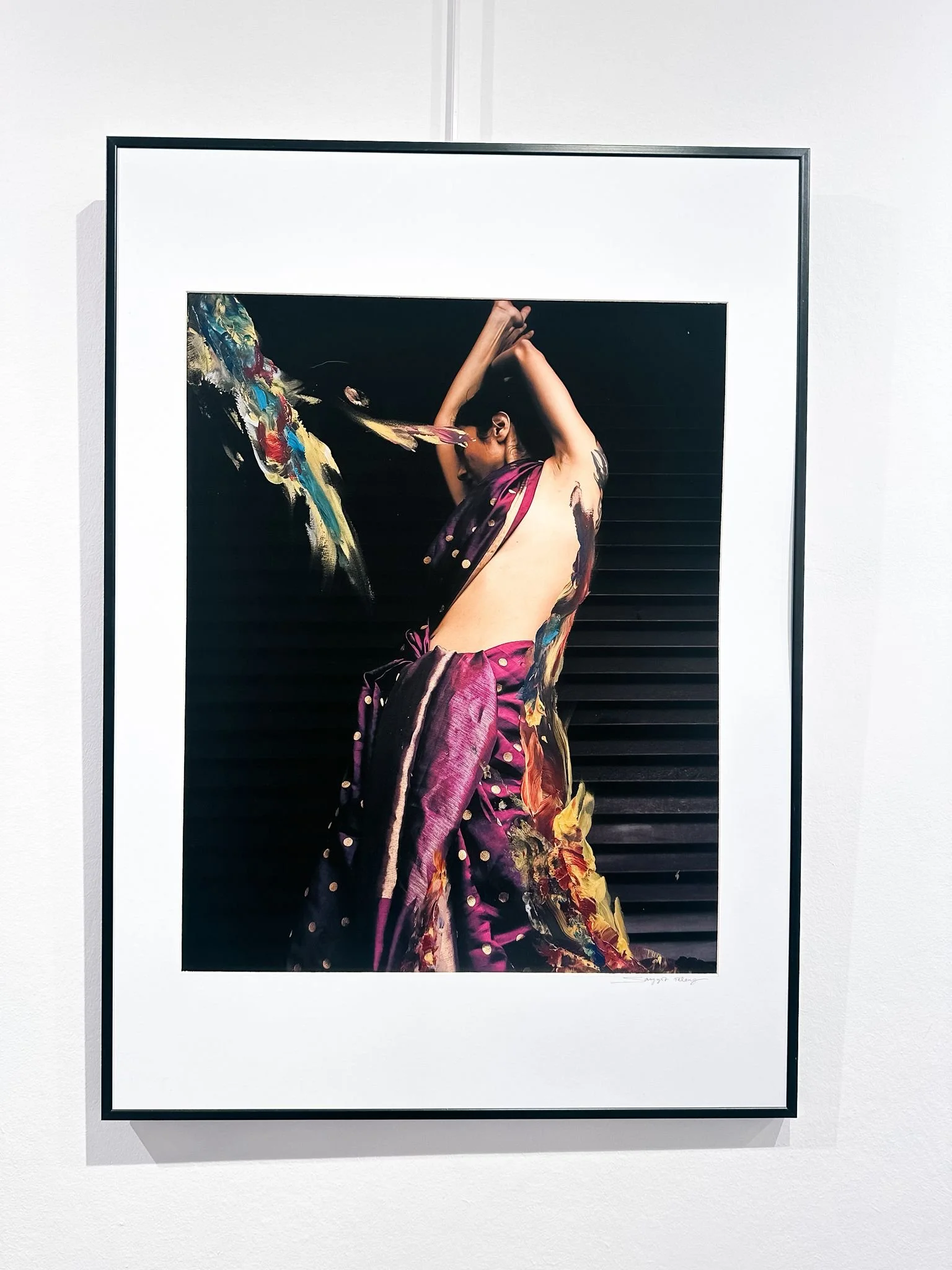
Image Credit: Masha Krupnova
Brief Shalimar is a private non-profit art salon in Paris, founded in 2024 by a small group of Parsons Paris students, united by a common goal of providing space for young artists to create and showcase their work.
This common goal created a collective heart of Zahra Mansoor, Demir Ramazanov, Fiona McDonnell and Keerthana Karthikeyan, who all decided to set free their art of any box or expectation of what it should be.
The salon began as a small organization, featuring the works of artists that felt like they did not have a place in Paris that could truly represent them; and so they decided to follow the creative mantra, “create what you wish existed”, and brought it to life. Since then, the salon has grown into a much larger and diverse community, without a focus on any specific group or art form, but rather, a poetic celebration of difference, while keeping its authentic atmosphere of inclusivity.
Fiona McDonnell, one of the founding partners of the salon and a drink and fragrance artist, shared the ultimate aim of the mission of Brief Shalimar: “Our goal from the beginning is how can we create an artist salon that we would want to be exhibited at? What is the best way for us to create an easy experience of exhibition for the artists and the people visiting? Inclusivity in every aspect has been really important to us from the beginning.”
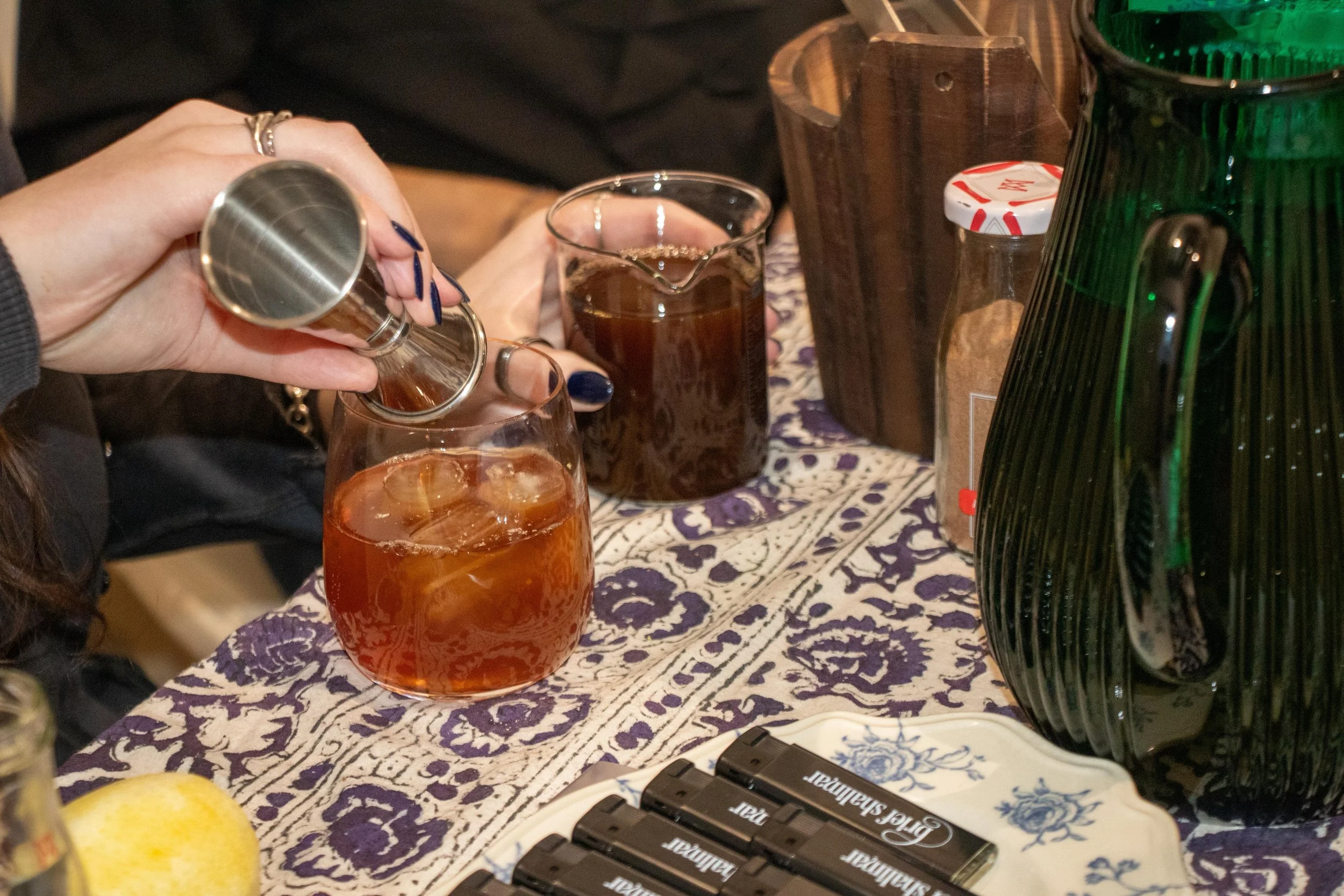
The name, Brief Shalimar, comes from two connected allusions: Shalimar Gardens in Lahore, Pakistan, and the Shalimar perfume by Guerlain, (created as a present for one of the perfumers of Guerlain's wife when he visited Lahore). The fragrance reference is specifically important to Fiona, as someone who studied perfumery, and who now brings to life new recipes for drinks presented at salon events.
“It's a brief moment”, says Fiona. “A brief Shalimar. Shalimar is also known as a brief experience of Utopia on Earth. I think that's kind of what the goal was: creating these ephemeral exhibits where we could have unique experiences that only exist for one time period, and then they - poof - disappear.”
a photograph by: Iman Salem
Nowadays Brief Shalimar welcomes and showcases all kinds of mediums of art: from painting and photography to film and poetry, inviting all forms of expressions as long as they come from the soul of the artist, and radiate the truth of their unique voice. I have been lucky to be present at three events, organized by the salon, at one of which I had the privilege of reading my poetry, written in response to their biannual exhibit’s prompt, “Tomorrow Will…”
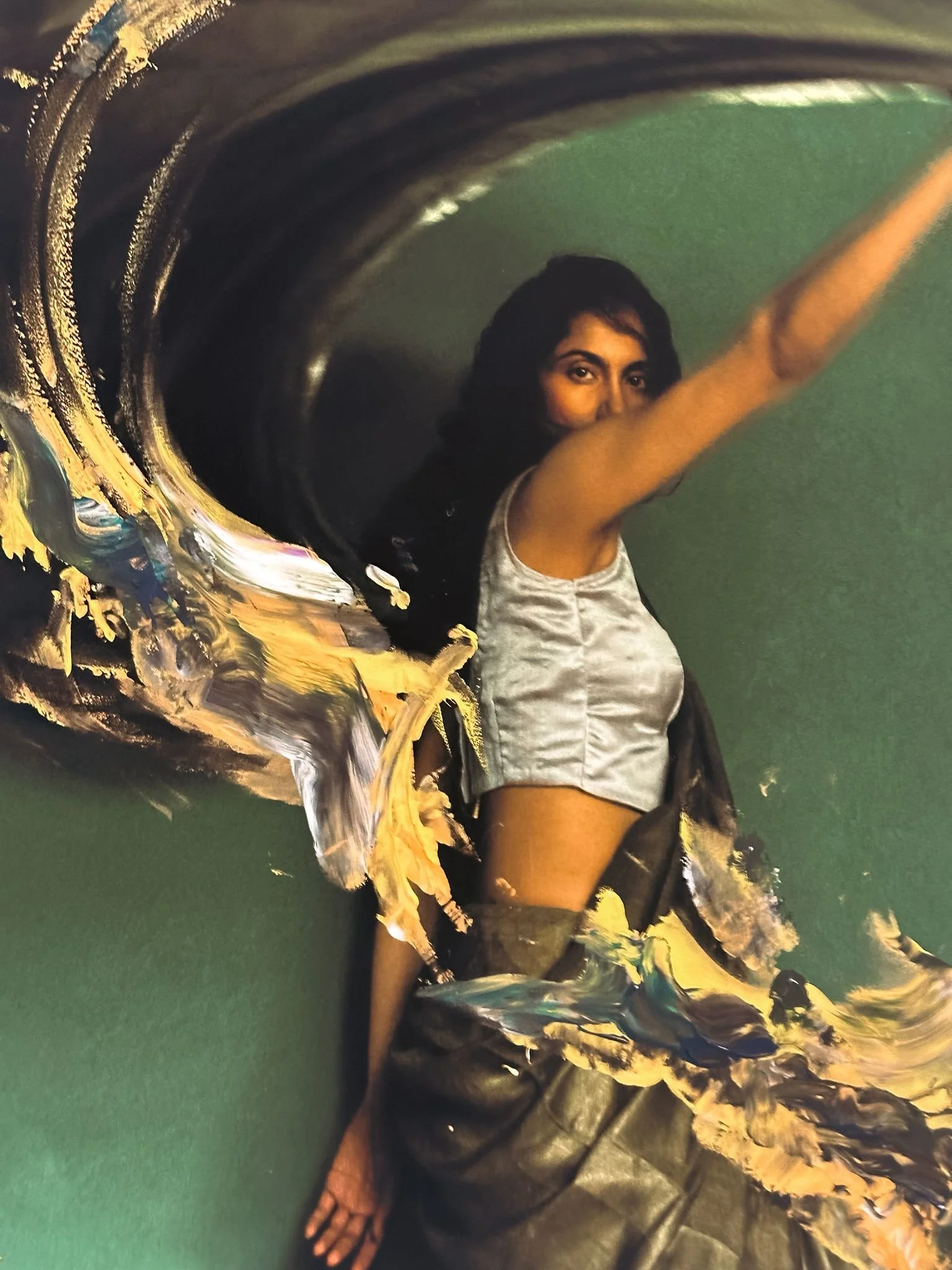
Image Credit: Masha Krupnova
I was present at an event called Grandma’s Verandah, organized on the occasion of the finissage of Sanjyot Télang’s exhibition “La Voix de Ma Grand-Mére”. Sanjyot Télang is an Indian photographer and visual artist, currently living and creating in Paris. Her vibrant pieces that were exhibited confidently combine photography and hand painting to depict something as sacred as her matriarchal lineage through unique mixed media of art. Sanjyot’s works all present a reminiscence of her grandmother and all those female voices and names, erased from the family tree by the oppression of the patriarchy. And yet, in depicting traditionally dressed Indian women dancing and posing with bold and confident attitude in the bathtub, laying around, with no blouse on the body, Sanjyot imagines that this woman on the printed works is no other than her grandmother. In this, she gifts her grandmother’s spirit the liberty to express herself in ways she never could during her lifetime. The artist emphasizes this previously stolen, from her maternal ancestors, liberty to dance, feel, enjoy and embrace their bodies with all their passions and sensations - as a free canvas, not an oppressively prewritten script.
The vivid hand painted gold, green and blue over pre-made photographs highlight the artist’s imagination and the desire to change the narrative of the women who came before her through her art, but also by simply existing. While Sanjyot would like people to understand their own unique story through the presented visuals, “[she’s] trying to imagine my grandmother's dancing and flying and laying on bed as they would have very much loved, but did not get a chance to.” “I don't think my grandma even danced, so I'd like to imagine they are the ones dancing here,” shares Sanjyot.
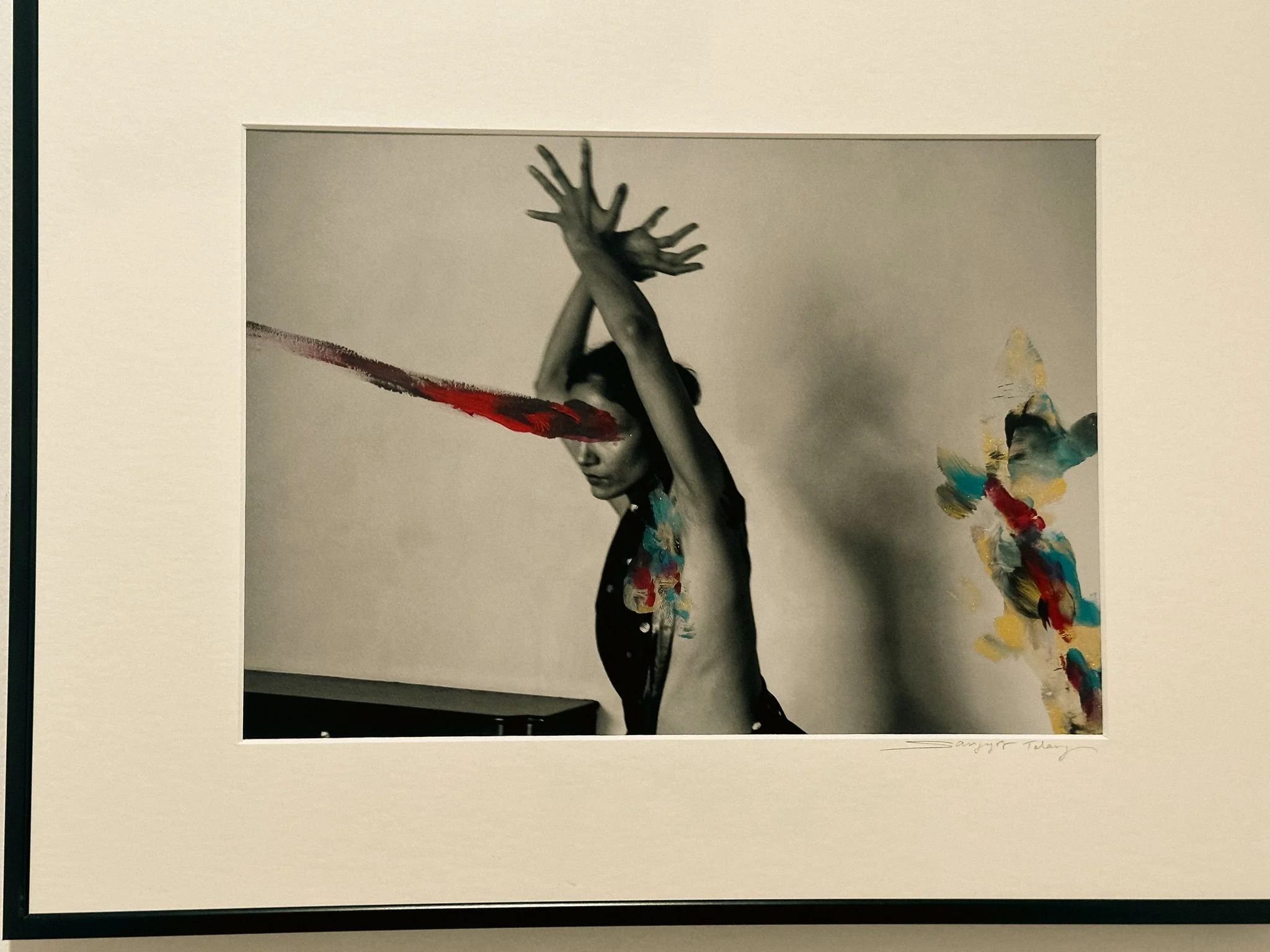
Image Credit: Masha Krupnova
The striking and sacredly intimate visuals are accompanied by sound installations, curated by Brief Shalimar, and created by a number of different artists, who resonated with the theme of matriarchal lineage. From a pre-recorded interview of a grandmother who recently passed away to deeply reflective nostalgic and yet provoking poetry, every audio artist metaphorically and sometimes - literally - embraces the voice of their past in the present.
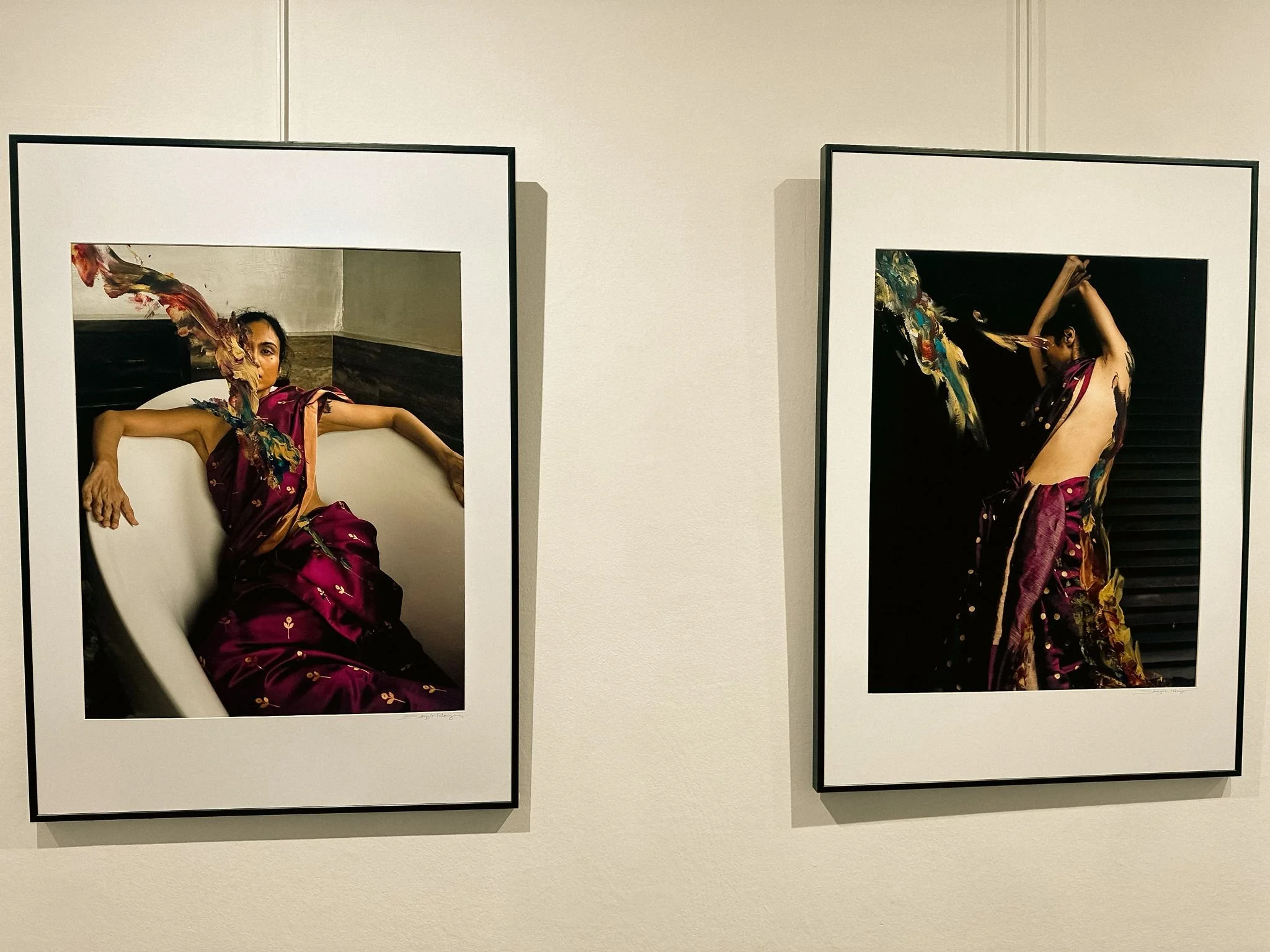
Image Credit: Masha Krupnova
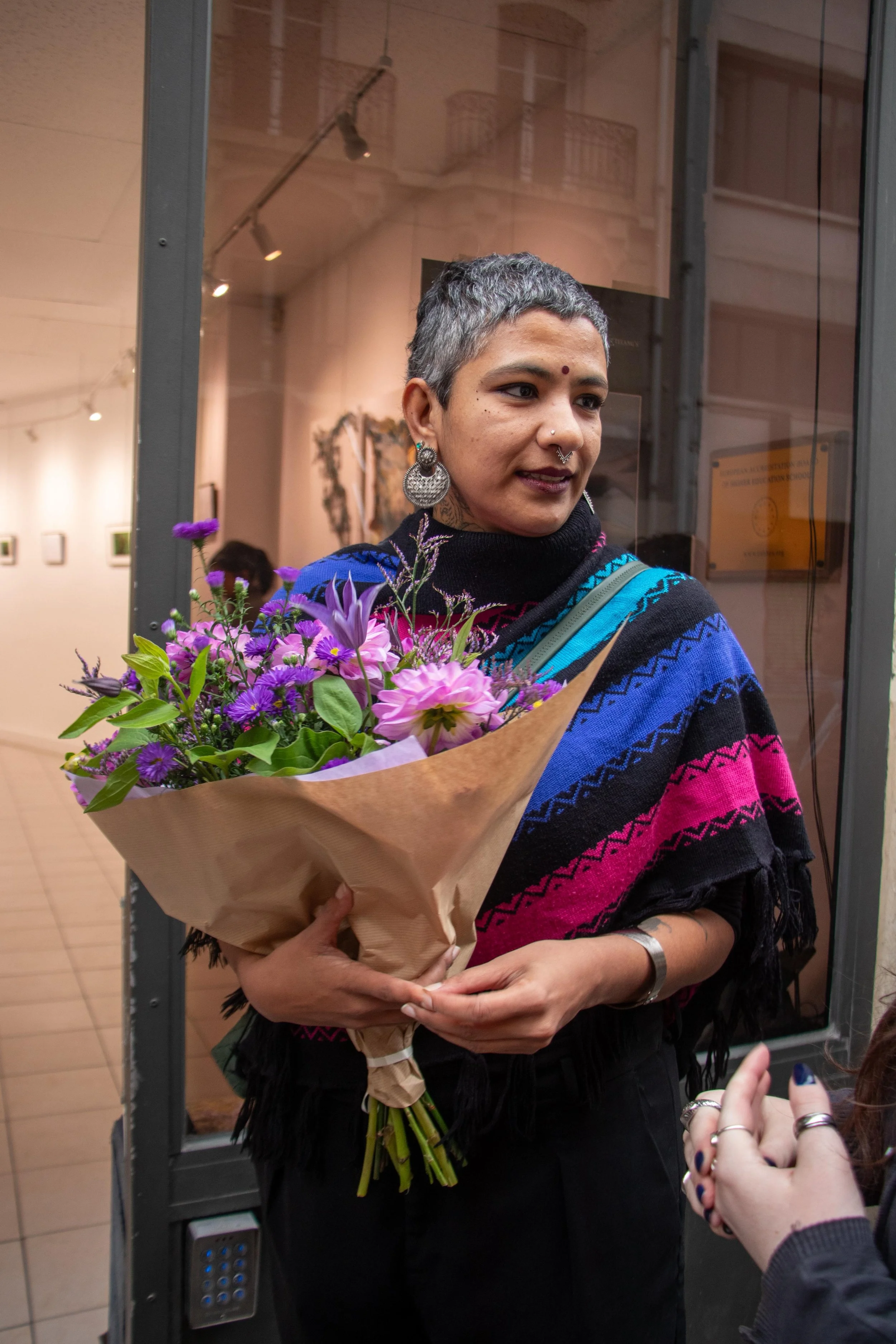
I’ve asked Sanjyot Télang and Najah Rizvi a few questions about the importance of today’s theme and the presence of their maternal ancestors in their practice:
MK: Do you feel like artistic vision has passed down your lineage and if not in what ways do you feel connected to the generations that came before?
Najah Rizvi:
I would say that academia is something which has been passed down many generations and that has greatly influenced my artistic practice. My mother wanted to be an artist and decided to imbue that desire into me. Sometimes, I do feel as though I’ve inherited her sensitivities towards materials and forms. Though my body is strong, I think the fragility of my mind has helped me to access deeper feelings. Fragility has always been there, for many generations and other families too.
Sanjyot Télang:
Absolutely—though maybe not in the typical sense of “making art.” I feel I’ve inherited a creative vision of life more than anything. A deep sense of agency, autonomy, and individuality as a woman.
I often feel traces of my grandmothers’ inner world in the way I think, speak, and live my values—love, compassion, integrity, sincerity. It’s like carrying a hypothesis of their vision through my own way of being.
MK: When you are creating your pieces in your specific medium, do you feel like along with yours, you are also sharing the story of your matriarchal figures who came before through freedom of expression they potentially didn't have?
Najah Rizvi: Of course, my mother didn’t have that freedom and definitely wanted to be an artist. In my spiritual practice, I think of her mother as well. When I’m writing, my paternal grandmother is in the back of my mind somewhere. It comes through in the way that I embody their attitudes and what I know of their temperaments. These three matriarchal figures are all very different people with their own unique sensibilities. As a result, you could say I carry some varying and opposing personalities into my work.
Sanjyot Télang: A hundred percent.
When I paint, I often imagine my grandmothers around me—laughing, gossiping, watching over me. In a way, I bring them alive through the memories I carry in my body. Through my process, I give voice to the expressions they may have never had the space to live fully.
MK: Were you close with your grandmothers? Do you feel their spirit present today (at the event)?
Najah Rizvi: I’ve only met and gotten the chance to know one of my grandmothers. The interview of my grandmother was playing today and I did feel that her essence is very present in her voice. I’m glad that I could share this and her story with people, because that was how I was able to feel close to her - by listening, I mean.
It’s hard to answer the question about closeness. She survived an atrocity which very few people on the planet remember. Partition violence is still poorly understood and wasn’t taught to me growing up. For most of my childhood, I couldn’t connect to that core memory of hers so when I interviewed her, that was when I began to understand who she really is. Unfortunately, she passed quite soon after this project, so I didn’t get to feel close to her for very long.
Sanjyot Télang: I was quite close to my maternal grandmother—she moved in with us when I was nine. She was a huge presence in my life, offering emotional and spiritual support through her silence, her smile, and her gentle gestures.
I think I only truly understood the strength she held after she passed.
Even now, I carry that resilience inside me.
And yes—on that night, I felt her with me.
MK: Thank you.
Sanjyot Télang photographed by: Iman Salem
If you are an artist in Paris, looking for exhibiting or showcasing your work, Brief Shalimar is always open to welcoming new voices. Terence Berchman, Shalimar's Curation & Production Co-ordinator, shares, “Shalimar is a garden and whoever becomes part of this family plants a flower, plants something that they want, and then it kind of stays with us. For the future, I really can't say because there's so many different initiatives that everybody, as part of the family, wants to do. Who knows who's going to be part of Brief Shalimar very soon?
And for those interested in sharing their pieces, I think they should just come and talk to us because we're always open for collaborations. We're always looking for ways to further the conversation. We [always] have different people that want to do different things. And that's what Shalimar is like: something that never stops evolving or something that never stops changing. Something that's not stagnant and something that's not forcing people to be in a form that they might not ideally want to be in.”
An alternative, and perhaps more organic way to exhibit with Brief Shalimar would be to submit your piece in response to the prompt they post on their Instagram (@briefshalimar) when a new event approaches.
This month, the salon, led by Fiona McDonnell and Clara Fortis, began a new initiative of creating a Shalimar Support Group with a mission of connecting and supporting artists with disabilities.
The future of Brief Shalimar and the joy that such free creative spaces exist lightened my heart, reminding me how there’s no box or boundaries for art as long as it’s yours, just as there is no limit to possibilities of where it might bring you. Fiona was right, it was truly a brief moment of paradise, coming and disappearing fast as a wave of a magic wand, but the thoughts and feelings this event and the raised conversations evoked will remain with me for a long time.