
“Not Just Any Old Stuff” : In Conversation with Michel of Plastic Soul Records
Polina Bryan
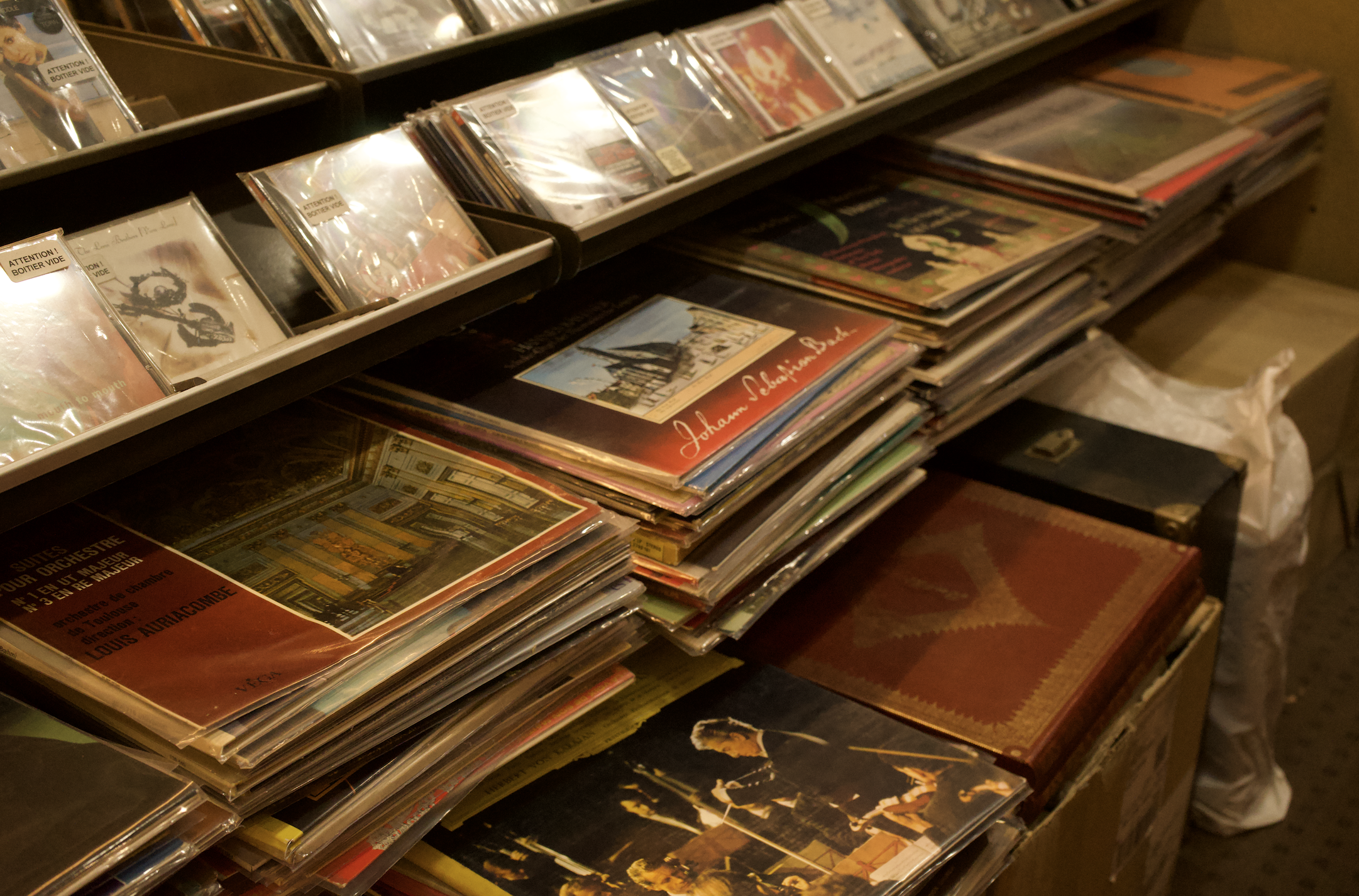
Plastic Soul Records. Image Credit: Polina Bryan
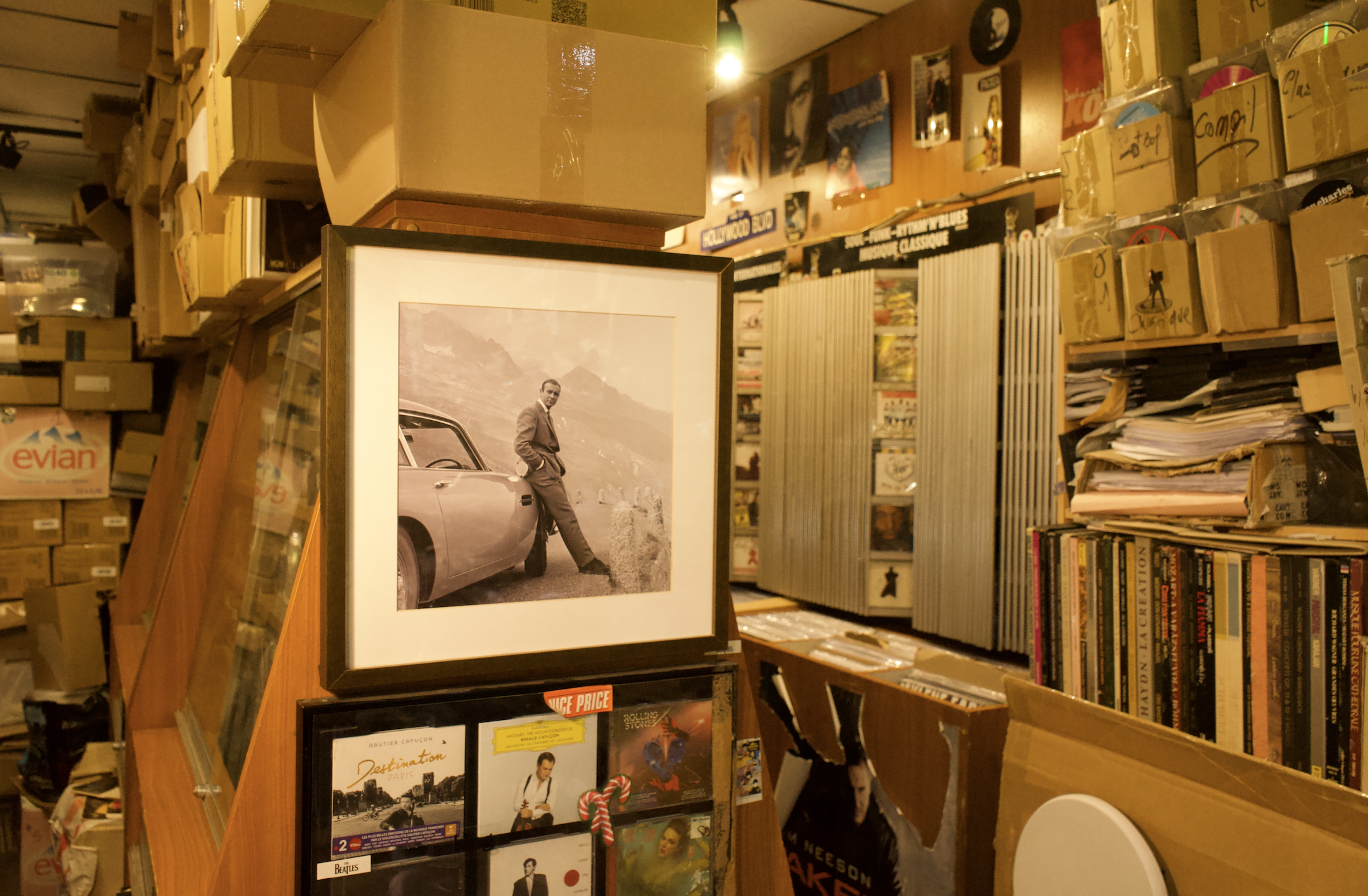
Off a four-way intersection in the 11th arrondissement sits Plastic Soul Records at 93 Avenue Ledru Rollin. The store’s sizable stock of CDs, vinyl, cassettes, and DVDs is already in clear view from the two wide display windows at the store’s front, sandwiching the glass door entrance. Yellow banners line the top of each window with bold lettering of the store’s name and phone number. The light inside is invitingly warm. Stepping in, the store is much smaller than one might have thought from outside - but utterly cozy.
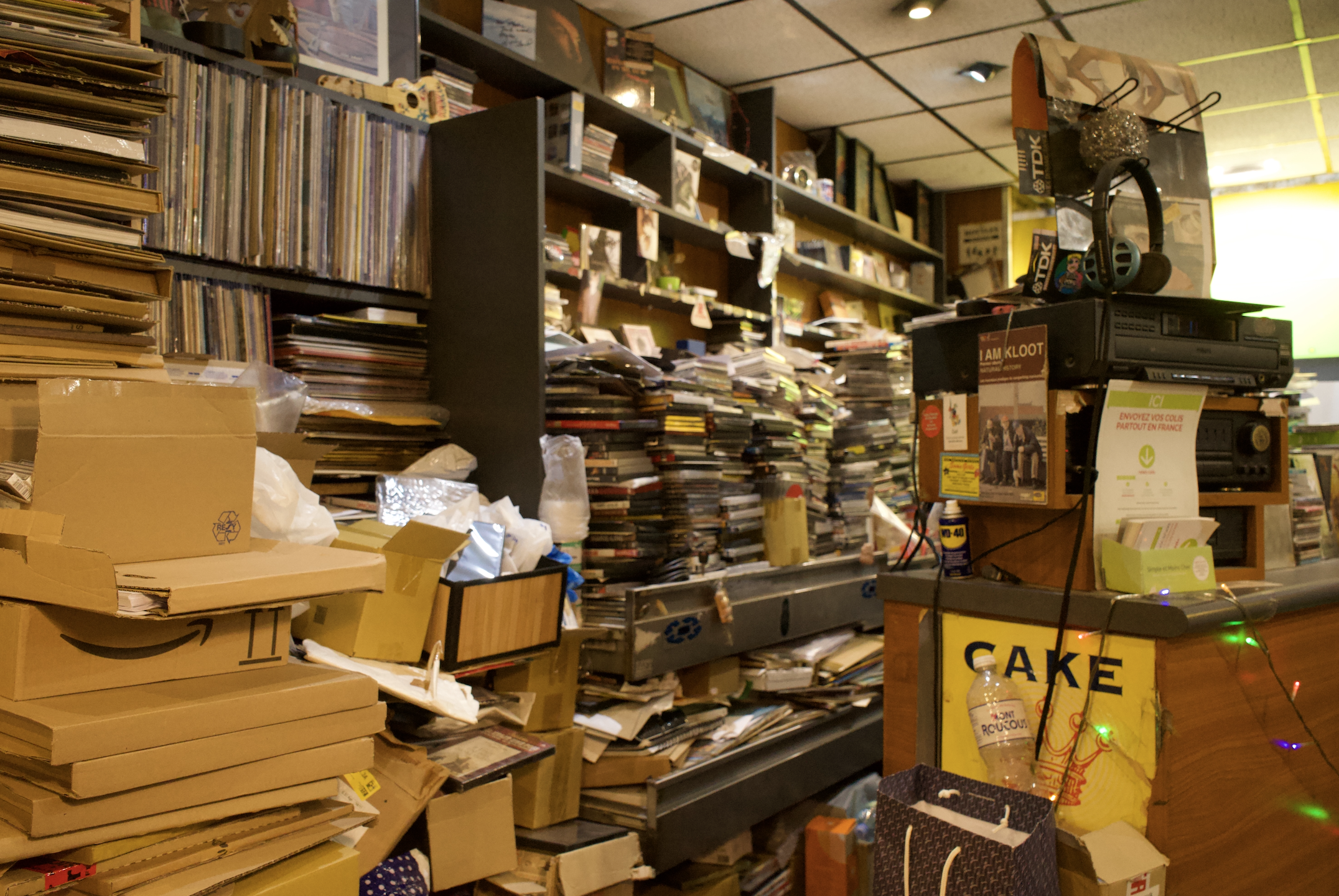
Plastic Soul Records. Image Credit: Polina Bryan
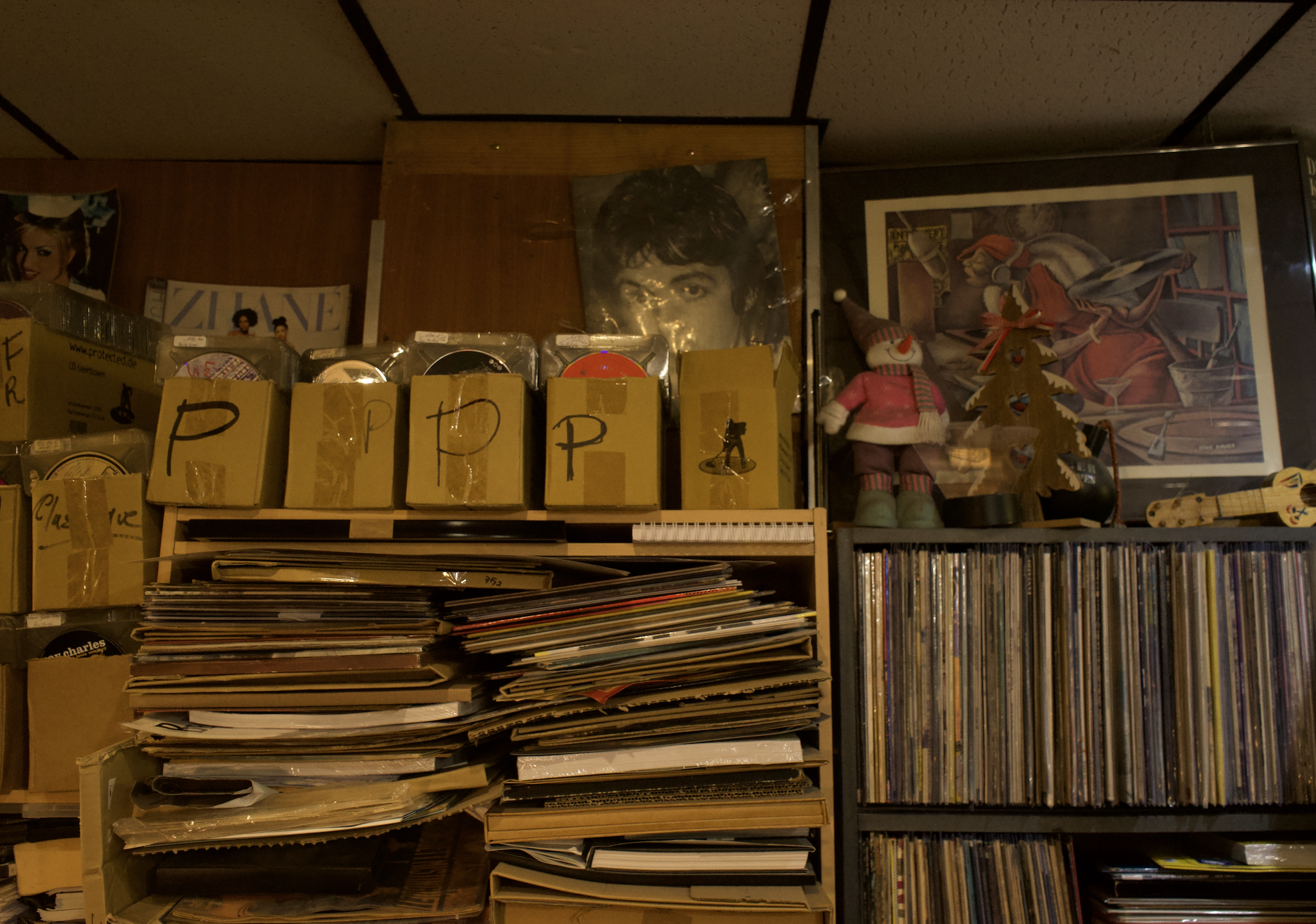
Towers, shelves, and boxes of discs line the entire perimeter of the store, stacked in piles everywhere. It feels more like an impressive storage room than a store. The vinyls, in particular, feel like such warm relics, with tattered sleeves and some with faded covers, hardly from a lack of care, but rather from forty years of customers flipping through in their searches. The tactile sense of the shop is remarkable, illuminated by cheerful year-round strings of Christmas lights.
Today, as one young customer leaves the store after perusing without purchase, they call to the store’s frontman Michel, “Thank you, goodbye, have a good day!” to which Michel heartily replies, “No, thank you, my friend! Always a pleasure!”
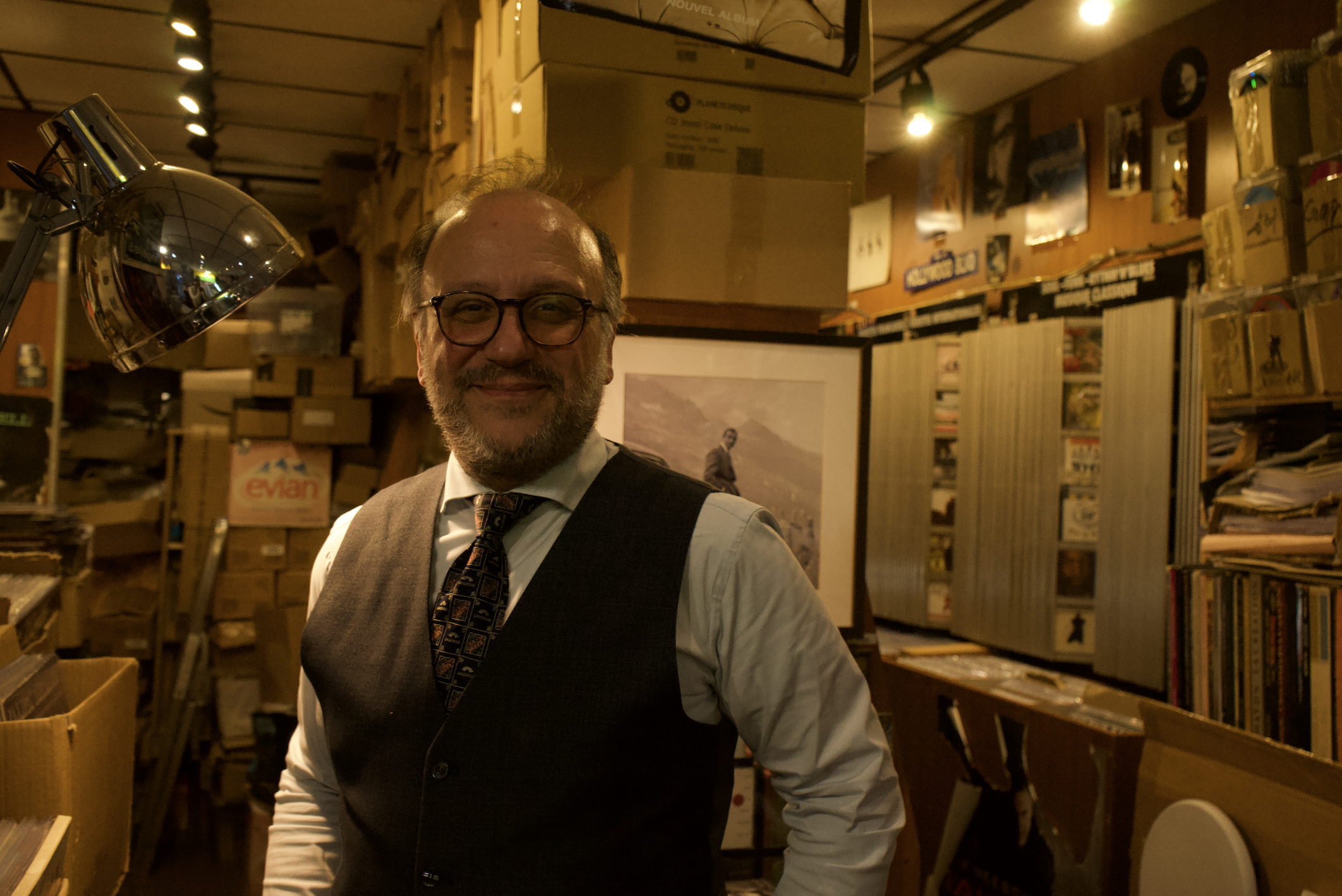
Michel, Plastic Soul Records Frontman. Image Credit: Polina Bryan
When not patiently consulting a customer, Michel lives behind the register at a counter stacked with files, records, boxes, forms, receipts, the like. With layered stacks of cardboard and papers behind him, he is totally enveloped, and it is an effort to get a glimpse of him from the other side of the counter. The type of ‘mess’ here is so carefully planted, so lived in, that you’re sure at one glance that not only has it been accumulating for years, but that it is far from clearing out for years to come.
Michel kindly agreed to speak with me about his store, and the life of one of Paris’s oldest disquaires. Here is that conversation, translated from French:
PB So, how and when did you open the store?
December 20, 1978.
PB Was it just you?
Well, me and my boss. My boss asked me to come, he had an idea to open the shop in this neighborhood, because, at least in this neighborhood, there wasn't yet a disquaire. Not yet. I had just come back from vacation in September. He said to me, “Listen, I have an idea. I want to start something here. It could be fun.” He said to me, “What do you think? Would you like to come work with me?” I said to him, “Yeah, okay, that's a good idea.”
PB And how did you come to decide on the name and vibe of the store?
It's from the rehearsals for the Beatles' album, Rubber Soul. During the recording sessions for "She's a Woman," when Paul McCartney is singing, at the end of the take, though I don't remember which take it was, Paul McCartney is announcing the title of the album that's going to be released, and he repeats, "Plastic Soul, Man, Plastic Soul, Man." And the album will later be called Rubber Soul. So, with that nod to Paul McCartney, we wanted to call the store Plastic Soul.
PB What was the neighborhood like when the store opened?
It was absolutely full of artisans. Lots of artisans, lots of people who were in the furniture business. There was a butcher shop on the corner where the McDonald's is now. There was a movie theater, it was sort of, well, something else entirely. Really something else, very different. There were craftsmen who had painting workshops. Who worked with wood, who worked with bronze. I'm not saying there aren't any left, there are still a few. But it's much less compared to before.
PB What's the oldest vinyl record you have in the store?
Well, in vinyl… in vinyl… Well, the thing is, there are albums, 78 rpm records that date back to the 30s, 40s, etc. So, those were the first records. But otherwise, with the first vinyl record, we have ones that came out in the 50s, actually, back when Columbia, CBS, first released what we call the LP, the long play - there you go. It came out in the 50s, '52, '53. The first 78 rpm records that came out were classical albums. Those came out… let me think…well, I don't have those. But I have the second type that came out. The next versions. So, it's the second vinyl record, which we call the LP. But I have some here from that time. Several times, people have wanted to buy some of these older records from me, but I'll tell you right here, those are for the shop.
PB How would you describe your philosophy for selecting records?
Well, let's just say, they have to be things that are interesting, that are likely to appeal to you in the broadest sense of the term, of course. And then, it's true that I have, well, my boss and I have a little…motto, that's a little strict I think. But I also like it. “If we don't have it, it's perhaps because you don't need it.” I admit it's being a little bit difficult. But there you have it.
PB Do you have any memorable anecdotes about customers who have become regulars?
Too many. We have so many regulars. There are people who came here when we opened, who still come. They were in school at the time. And now, they're working, there are some who are about to retire. I've been working here for 40 years, 45 years. They come here, they say to me, “Do you remember when I used to come to buy records when I was in high school?” Now, they're grandfathers. It's incredible. It's great. I love it.
PB And what kind of conversations do people have here?
Music. Always music, essentially. Of course, sometimes there are little things like, “So, you've seen the weather, it's a bit cold, it's quiet today.” People wandering around. Things like that. But otherwise, in 95% of cases, it's music. And everything. Absolutely everything. Current, old, whatnot, memories, stuff. Quite a bit of everything.
PB What kind of friendships or connections have come about as a result of the store?
Certainly, most notably with people from record companies. At first, they came to proper sessions for their work. And then, little by little, they became people we knew, friends, close acquaintances, you know. Much more than just contacts, but friends.
PB How has the clientele evolved? Has it evolved much?
It has evolved a bit according to the products, according to the music, according to the formats, etc. But in a way it's also stayed pretty much the same. There you go. People say, trends evolve, things change, artists become…whatever they become. Yes, we're looking for new artists. But the clientele themselves follow their own trends, a certain temperament, a musical direction. So, the people who came here back in '89, '90, they have pretty much the same, I suppose, the same mindset today, even now towards newer music. So it feels the same.
PB Do you have a lot of younger people coming in these days?
It's always a mix, right? There are young people, not-so-young people, old people, very old people, and very very old people.
PB And what about the life of a record store owner has remained absolutely unchanged?
The desire to get up this morning, to come and start working, because there are so many things to show people, and I love to accommodate the people who come to see us. That's it really.
PB Do you always listen to vinyl at home? What’s your favorite stuff to listen to?
Of course. Everything, everything, everything. Everything. I’ll listen to film music, music from around the world, rock songs, something more recent, lots and lots of things. Classical too, yes, jazz of course, naturally. Lots and lots. Everything, everything. Sometimes French jazz. I happen to listen to a lot of Sidney Bechet. Last weekend, actually, I was listening to Sidney Bechet.
PB Who do you recommend in terms of French artists?
There are so many. There are many French artists you already know, I mean, if you want to talk about the artists we're used to. We're used to seeing or catching glimpses of Jacques Brel, Brassens, Piaf. Then there are people like Thiéfaine, who are very good, like Jean Ferrat too. Michel Jornas. I was talking with someone earlier about Alain Barrière. Alain Barrière, when you really listen to his lyrics, he's quite handsome, the guy. He's good. Pierre Groccola, who was funny. Michel Polnareff, of course. There are so many. Maxime Le Forestier. Yves Montand. Catherine Lara. There are some really interesting things in Catherine Lara's work. Julien Clerc, there are some interesting things there. There is really quite a lot, actually. Francis Cabrel. Jean-Jacques Goldman. I’m realizing now, I’m saying many male artists, it's funny. Plenty of female artists too. There's Fabienne Thibault, although she's Canadian. So much material there. Barbara, of course. We can't leave that one out. Juliette Gréco, too, of course. Because we have to include female artists as well. And what artists they are! They're giants. Not just any old stuff. There you go.