
In Conversation with Tala Elamine of dum supplement
by Nico Seidenverg

Image credit: Alexandre Peyrieux
“This guy was just talking about all the multivitamins he was taking, like ‘this one’s for Vitamin D absorption’ or whatever.” Tala Elamine, singer and bassist for dum supplement, joked about the origin of the band’s name. The Montreal native was recounting when she and Gabriel Peyrieux, the guitarist and other half of the band, went to Binic Folk Blues festival in Brittany a little over a year ago.
The duo first met at a studio while Gabriel was working with another band, and hit it off quickly. According to Tala, it took a while to begin making music together, despite the immediate mutual interest. Tala has a varied background, born in Lebanon, raised in Montreal, studied theatre in London, and now living in Paris. While studying theatre, she realized she felt more suited to singing and poetry than acting, where she said she felt “too in [her] own head”.
When I first saw the band live the duo meshed so well on stage, with Gabriel’s precise riffs and Tala’s soft vocals, that it was hard to believe the project was only a year old. Unlike Gabriel, who’s “one of those people who was playing at five,” Tala had only ever played guitar before picking up bass for the band. She took on the notoriously difficult task of playing bass and singing at once, and said Gabriel warned her it wouldn’t be easy. She jokingly blamed her Aries placement for not being deterred, and that determination has certainly paid off on stage.
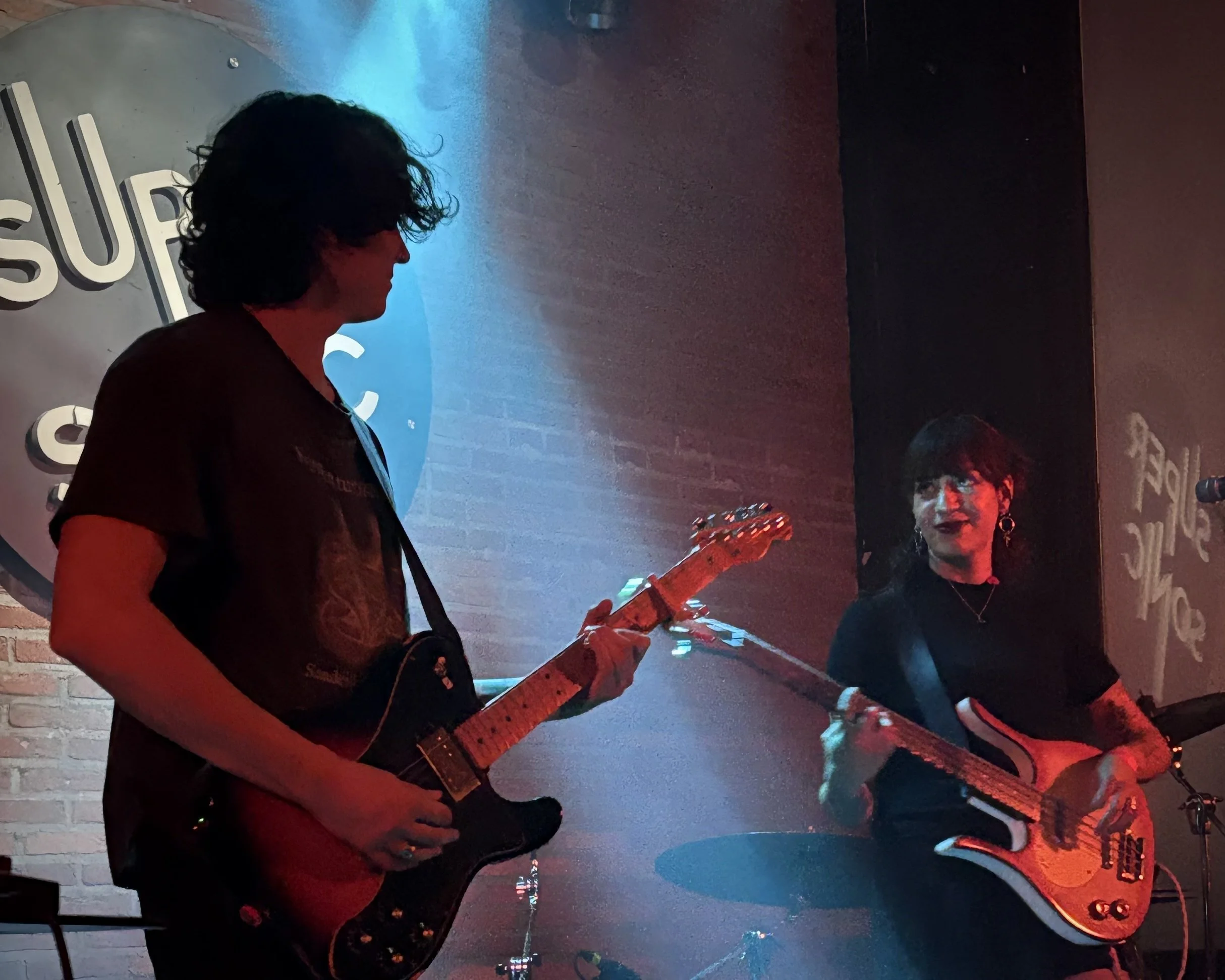
Image credit: Nico Seidenverg
This past September, dum supplement’s debut EP was released. Recorded over the span of three days in Gabriel’s father’s house in the country, the 20-minute-long self-titled record strikes a balance between grungy and dreamy, with relentless guitars complimenting soft and echoey vocals. Engineered and mixed by a friend, Tala described completely taking over the living room and squabbling with their sound engineer only weeks before release.
The EP’s lead single, “dumb american”, came with a vibrant music video released a month later. When asked about the inspiration for the video, Tala said that the idea hit her while listening to the song. She had a vision of “a guy doing some degrading job,” explaining that part of the song’s essence was the endless drive to be productive, above all else and at the cost of self-fulfillment. That theme is emphasised by the choice to put Gabriel in a cow costume, spinning a sign that says “It’s milking time!” and eating burgers in a parking lot. “Cows are the most exploited animal,” she said plainly. The video was partially shot in a friend’s house, with some scenes depicting Tala as a trophy wife-type character. During filming, she admitted that she “smoked like seventeen cigarettes,”. The cluttered rooms and retro, aerobic tape serve the nostalgic feeling of the video without explicitly insisting the viewer reminisce about a specific experience or cultural touchpoint. The feeling of emptiness in a life lived in search of productivity (and the burnout that comes from it) is echoed in “bedrot”, a song Tala introduces as being “about being a waste of space” before playing on stage.
Tala called “people pleaser” one of the songs she’s most proud of on the EP, both because of the relatable, introspective lyrics, and the driven instrumentals built off of a friend’s guitar riff culminating in a powerful solo. The penultimate song, “only sometimes” was a last minute addition, but a well-placed slow-and-soft respite before the more upbeat conclusion, “nothing really matters”. The song took some inspiration from Everything You Hate Is Going to Die by Daniel Sloss, a book recommended by a friend. According to Tala, the title’s sentiment captures the song’s intent: everything is temporary, both the good and the bad. She admitted that she herself indulges in Genius’s Behind the Lyrics and in mapping out the stories told between songs and albums, but expressed, “I feel like explaining what each lyric means cheapens the song a bit.”
When asked to describe their sound and inspirations, Tala cited 90’s alternative icon Cat Power and indie folk rock darling Kurt Vile as influences. In particular, Tala mentioned Cat Power’s 1996 album What Would The Community Think as one of her all-time favorites, alongside electronic-adjacent groups Bowery Electric and Broadcast.

Image credit: Marine Tallemet
When I met up with Tala on a café terrace near Gambetta, she was reading Nabokov’s Lolita. With a grimace, she explained that she first read the controversial novel at sixteen, and in rereading it now, she feels even more conflicted with Nabokov’s beautiful writing, despite the concerningly specific details. That wariness and critique of exploitation continued when I asked her about what books she did like. She highlighted Martin Eden by Jack London, mentioning how she relates to the struggle of being an artist or, in the titular character’s case, a writer. She also praised the novel’s relevancy, even saying that with the themes of social class and isolation, it could very well have been released today. Tala’s inclination towards the writings of London makes sense, with his environmentalist views and critiques of capitalism echoing in the lyrics of “dumb american”; ”I’ll make you pay every cent you made / I’m taking everything out of you”.
I asked about the Paris indie scene, and Tala had nothing but praise for how open the community is. “If you aren’t from Paris, it can seem a bit clique-y at first,” she said, “but everyone’s so sweet and welcoming.” She recounted a time when the band had only one demo and barely a full set, and a booker still gave them a chance. Though Paris is better known for its jazz, soul, and rap scenes, a vibrant punk and alternative scene persists. Tala mentioned Knife Crime and Chest as local acts she’s a fan of.
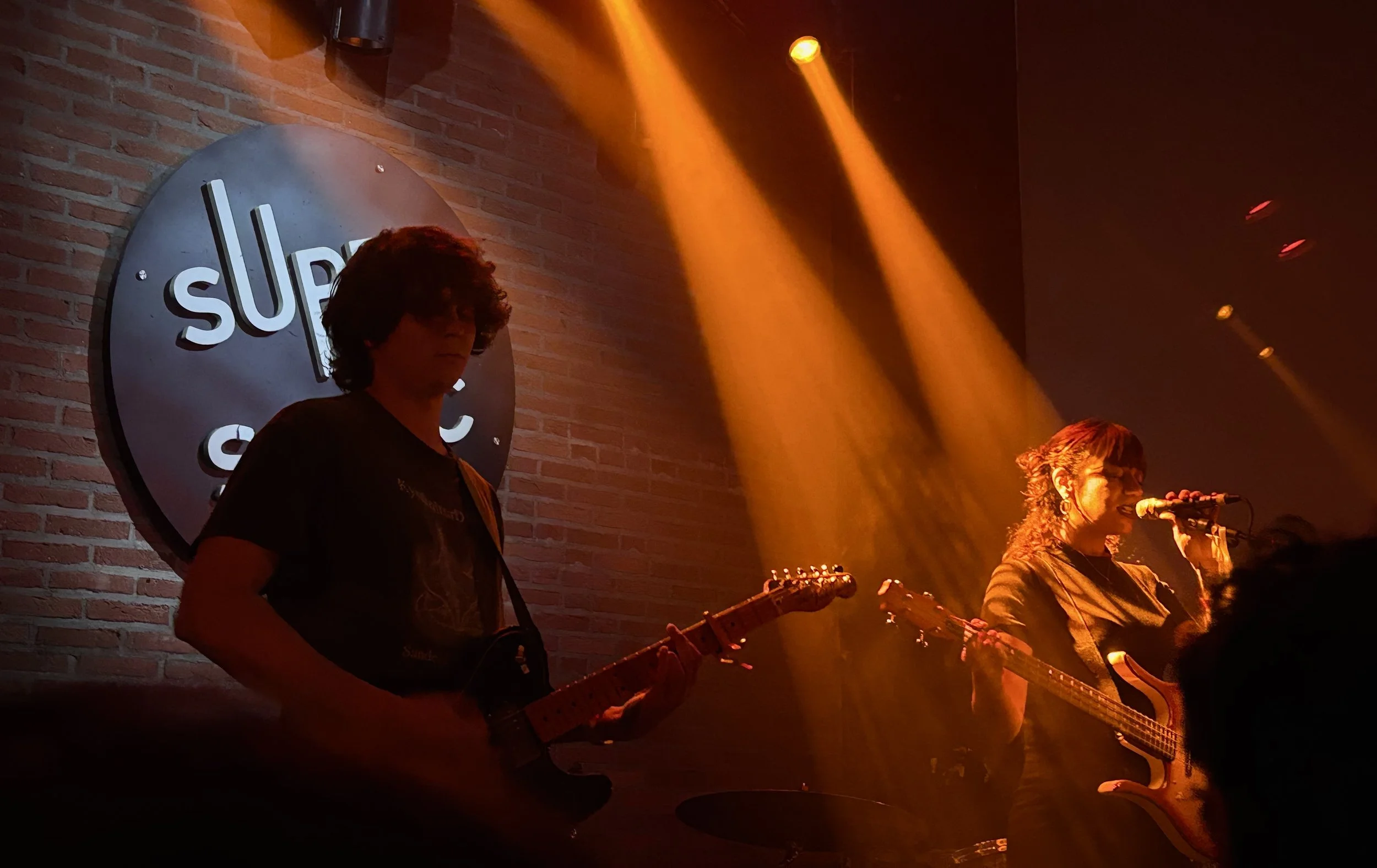
Image credit: Nico Seidenverg
She also expressed disappointment with the closing of a number of small venues and creative spaces. While reminiscing on gigs and events of years past, every other venue came with an asterisk of “it’s been closed”. Nightlife not returning to normal after the pandemic, rising costs, and gentrification are all possible reasons why famous clubs like L’International or Le Bus Palladium are closing. Despite the closing of many venues, she praised free or near-free venues like Supersonic and Truskel, as well as the owners of Le Chinois, a Chinese restaurant-turned club-turned intimate setting for acts of all genres. “They just love music,” Tala said.
As the other patrons on the terrace slowly cycled out, Tala revealed that the band was already looking forward to a new record, with a “darker, more shoegaze-y” sound and a long sought-after drummer instead of a detested rhythm machine. She admitted that although having a label might have made the going easier, she values the freedom remaining independent affords the band. Ultimately, bands like dum supplement, using their community of friends and fellow artists to keep making room for new music, show that a scene can outlast the spaces it loses.